
|
Getting your Trinity Audio player ready...
|
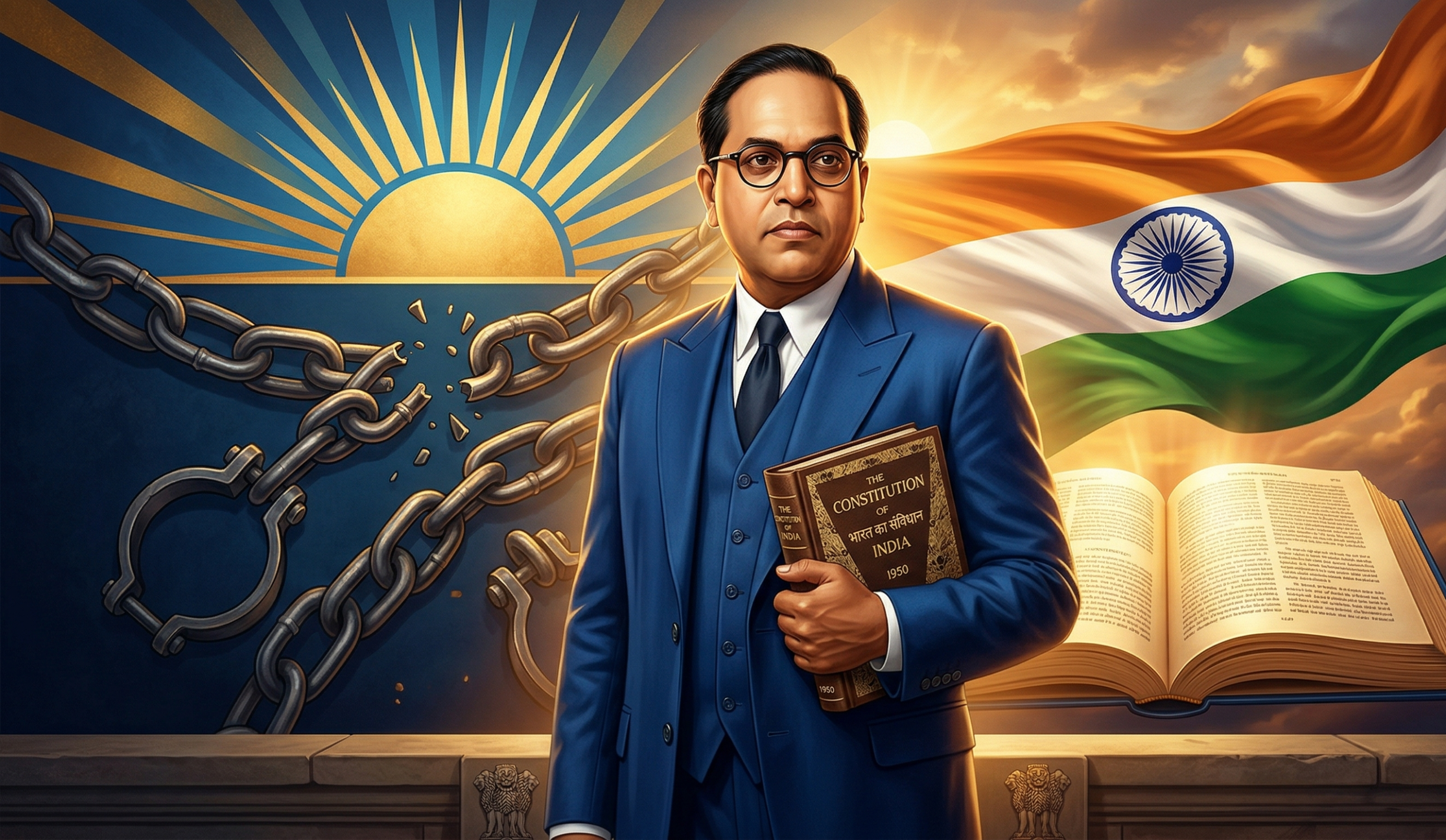
Top 20 Powerful Ambedkar Quotes on Caste System That Still Resonate Today. Some voices don’t fade with time. They get louder. Dr. Bhimrao Ramji Ambedkar — Babasaheb to millions — was not just the architect of India’s Constitution. He was a man who lived through the cruelest form of social discrimination, rose above it with sheer intellect, and then turned around to fight the very system that tried to crush him. His words weren’t written for textbooks. They were forged in fire — the fire of personal humiliation, relentless struggle, and an unshakeable belief that every human being deserves dignity.
And here’s the thing — decades after he spoke them, his words hit just as hard. Maybe even harder. Because the caste system he challenged hasn’t vanished. It has just changed its clothes.
In this article, we bring you 20 powerful Ambedkar quotes on the caste system that still resonate in today’s world. These are not just motivational Ambedkar quotes for Instagram captions — these are ideas that can genuinely change the way you see society, justice, and your own place in the world. Whether you are a student, a thinker, or simply someone who cares about equality, these Dr Babasaheb Ambedkar quotes will make you pause, reflect, and perhaps even act.
Let’s get into it.
Who Was Dr. B.R. Ambedkar? A Quick Context Before the Quotes
Before we dive into the quotes, a little context goes a long way.
Born on April 14, 1891, in Mhow, Madhya Pradesh, Ambedkar was born into the Mahar caste, classified as “untouchable.” From his very first day in school, he faced discrimination — made to sit outside the classroom, denied water from the common pot, treated as less than human. But instead of breaking, he educated himself. He earned degrees from Columbia University, the London School of Economics, and Gray’s Inn. He became India’s first Law Minister and the chairman of the Drafting Committee of the Indian Constitution.
His life was a masterclass in turning pain into purpose. And his words? They are the distilled wisdom of a man who understood oppression from the inside and fought it with the most powerful weapon available — knowledge.
Now, let’s hear from the man himself.
The 20 Most Powerful Ambedkar Quotes on the Caste System
Quote 1: The Root of Outcaste Identity
“The outcaste is a bye-product of the caste system. There will be outcastes as long as there are castes. Nothing can emancipate the outcaste except the destruction of the caste system.”
This is perhaps one of the most direct and powerful Ambedkar quotes ever uttered. Ambedkar wasn’t interested in reforming the caste system or making it “nicer.” He understood that the very existence of caste hierarchy automatically creates people at the bottom. You can’t fix the floor while keeping the ceiling intact. The system itself was the problem.
Quote 2: Caste as Control
“Caste is another name for control. Caste puts a limit on enjoyment. Caste does not allow a person to transgress caste limits in pursuit of his enjoyment.”
Think about that word — control. Ambedkar saw caste not as a cultural tradition but as a mechanism of power. It told people what to eat, whom to marry, what work to do, and whom to socialize with. It wasn’t culture; it was a cage. This Ambedkar quote in English strips away all the romanticization and shows caste for what it truly is — a system designed to limit human freedom.
Quote 3: The Disease of the Mind
“Caste is a state of mind. It is a disease of mind.”
Short. Sharp. Devastating. Ambedkar argued that caste doesn’t live in laws or institutions alone — it lives in people’s heads. You can change the Constitution, pass new laws, create reservation policies — but until the mindset changes, the disease remains. This is why these motivational Ambedkar quotes go beyond politics and enter the territory of human psychology.
Quote 4: Not Just Division of Labour
“Caste system is not merely division of labour. It is also a division of labourers.”
This is one of the most intellectually sharp Dr Babasaheb Ambedkar quotes in the collection. He challenged the common defense that caste was simply about organizing work. No, he said — it organized people. It ranked human beings. It decided at birth who would be a priest and who would clean gutters. There was no choice, no mobility, no merit.
Quote 5: The Weapon Against Reform
“Caste in the hands of the orthodox has been a powerful weapon for persecuting the reforms and for killing all reform.”
Notice that phrase — “powerful weapon.” Every time someone tried to bring change, the caste system was weaponized to shut them down. Social boycott, excommunication, violence — all tools deployed under the banner of tradition. This inspiration powerful Ambedkar quote reveals how deeply entrenched resistance to change really was.
Quote 6: Caste Killed Public Spirit
“The effect of caste on the ethics of the Hindus is simply deplorable. Caste has killed public spirit. Caste has destroyed the sense of public charity. Caste has made public opinion impossible.”
This is Ambedkar the sociologist speaking. He observed that when people think only in terms of their caste, they lose the ability to think as a nation. There’s no “we” — only “us vs. them.” Public welfare becomes caste welfare. Charity becomes selective. And genuine public opinion becomes impossible because everyone is looking through the narrow lens of their own caste identity.
Quote 7: Equality as a Governing Principle
“Equality may be a fiction but nonetheless one must accept it as the governing principle.”
Here is the pragmatic genius of Ambedkar on full display. He wasn’t naive — he knew perfect equality might never be fully achieved. But he insisted it must still be the goal, the guiding star. Without it, society defaults to hierarchy, and hierarchy always crushes those at the bottom. This is among the most widely shared Ambedkar quotes on equality.
Ambedkar’s Quotes on Social Democracy and Freedom
Quote 8: Social Democracy as the Foundation
“Political democracy cannot last unless there lies at the base of it social democracy.”
Elections mean nothing if society itself is unequal. You can’t vote your way out of caste discrimination. Ambedkar warned that India’s political democracy would always remain fragile unless social democracy — where liberty, equality, and fraternity are lived, not just written — was established first. Decades later, this warning feels more relevant than ever.
Quote 9: Social Liberty Over Legal Freedom
“So long as you do not achieve social liberty, whatever freedom is provided by the law is of no avail to you.”
Laws on paper mean nothing if society doesn’t respect them in practice. An “untouchable” might have legal rights, but if the village still won’t let them draw water from the well, what good is the law? This powerful Ambedkar quote lays bare the gap between legal equality and lived reality — a gap that still exists today.
Quote 10: Political Tyranny vs. Social Tyranny
“Political tyranny is nothing compared to the social tyranny and a reformer who defies society is a more courageous man than a politician who defies Government.”
Read that again. Ambedkar wasn’t just challenging governments; he was challenging entire social structures. And he recognized that standing up against society’s deeply held prejudices requires far more courage than opposing a political regime. Politicians face elections. Social reformers face exile, violence, and sometimes death.
Quote 11: Religion as a Source of Power
“Religion, social status, and property are all sources of power and authority which one man has, to control the liberty of another.”
This is Ambedkar the political philosopher. He understood that oppression isn’t just economic — it’s social, religious, and cultural. The caste system drew its power from all three sources simultaneously, creating an almost unbreakable web of control. Recognizing these multiple layers of power is essential for anyone trying to understand social inequality.
Dr Babasaheb Ambedkar Quotes on Education and Self-Respect
Quote 12: Educate, Agitate, Organize
“Be educated, be organised and be agitated.”
Three words. An entire revolution. This is arguably the most famous of all Ambedkar quotes, and it works as a formula for change. First, educate yourself — understand the system. Then, organize — build collective power. Finally, agitate — demand change. Notice the order. Education comes first. Always. This motivational Ambedkar quote has become a rallying cry for social movements around the world.
Quote 13: Self-Respect as the Starting Point
“Learn to live in this world with self-respect.”
Simple, powerful, and deeply personal. For a community that had been systematically told they were less than human, self-respect wasn’t just a nice idea — it was revolutionary. Ambedkar understood that external freedom means nothing without internal dignity. Before you can fight the system, you must first refuse to believe what the system says about you.
Quote 14: Cultivation of Mind
“Cultivation of mind should be the ultimate aim of human existence.”
Not wealth. Not status. Not power. The mind. Ambedkar, one of the most educated Indians in history, placed intellectual growth above everything else. He believed that an educated mind is a free mind — and a free mind is the most dangerous thing to any oppressive system.
Quote 15: Life Should Be Great
“Life should be great rather than long.”
Among the most inspiring powerful Ambedkar quotes, this one is about purpose. Ambedkar himself lived only 65 years, but the impact of his life continues to reshape an entire nation. He didn’t chase longevity; he chased meaning. And that distinction matters — especially for young people trying to figure out what to do with their lives.
Ambedkar’s Vision: Quotes on Justice, Constitution, and the Future
Quote 16: History and Revolutions
“History bears out the proposition that political revolutions have always been preceded by social and religious revolutions.”
Ambedkar was a student of history, and he saw a clear pattern: you can’t change politics without first changing society. The French Revolution was preceded by the Enlightenment. The American Civil Rights Movement was preceded by decades of cultural resistance. Ambedkar believed India needed its own social revolution before any meaningful political change could take hold.
Quote 17: The Constitution as a Living Document
“The constitution is not a mere lawyers document, it is a vehicle of life, and its spirit is always the spirit of age.”
Ambedkar didn’t write the Constitution as a rigid rulebook. He designed it as a living, breathing framework that should evolve with the times. This Dr Babasaheb Ambedkar quote reminds us that the Constitution isn’t just for lawyers and judges — it belongs to every citizen and should reflect the aspirations of each new generation.
Quote 18: Lost Rights and Relentless Struggle
“Lost rights are never regained by appeals to the conscience of the usurpers, but by relentless struggle.”
No oppressor ever voluntarily gave up power. Ambedkar knew this from history and from personal experience. Rights are won, not gifted. Polite requests don’t change systems; sustained, organized resistance does. This is one of the most fiery and motivation-packed Ambedkar quotes in English.
Quote 19: Democracy as Revolutionary Change
“My definition of democracy is — A form and a method of Government whereby revolutionary changes in the social life are brought about without bloodshed.”
Ambedkar’s definition of democracy was radically different from the textbook version. He didn’t see it merely as voting or parliament. He saw it as a mechanism for peaceful revolution — a way to fundamentally transform society without violence. That’s a breathtaking vision, and it remains the ultimate test of any democracy.
Quote 20: I Like the Religion of Liberty
“I like the religion that teaches liberty, equality and fraternity.”
The final quote in our list, and it beautifully summarizes Ambedkar’s entire worldview. He wasn’t anti-religion — he was anti-oppression. He judged every religion, every system, every tradition by one simple test: does it promote liberty, equality, and fraternity? If yes, he embraced it. If no, he rejected it. This principle led him to embrace Buddhism in 1956, along with nearly 500,000 followers.
Why These Powerful Ambedkar Quotes Still Matter in 2026
You might wonder — why do quotes from someone born in 1891 still matter?
Because the problems he identified haven’t gone away. Caste-based discrimination still exists — in hiring, in marriages, in everyday social interactions. Manual scavenging continues. Honour killings over inter-caste marriages make headlines every month. The mindset Ambedkar diagnosed as a “disease of mind” is still very much alive.
But so is the antidote he prescribed: education, organization, and self-respect. Every time a Dalit student earns a degree, every time a marginalized community organizes for its rights, every time someone refuses to accept the identity that caste assigns them — Ambedkar’s vision lives on.
These aren’t just Ambedkar quotes for decoration. They are blueprints for action.
Pro Tips: How to Use These Ambedkar Quotes Meaningfully
Here are some practical ways to engage with these inspiration powerful Ambedkar quotes beyond just reading them:
Share them with context. Don’t just post a quote on social media — add a line about why it matters today. Context turns a quote into a conversation starter.
Use them in essays and debates. Students preparing for competitive exams, essay writing, or public speaking will find these Dr Babasaheb Ambedkar quotes incredibly useful for building strong arguments on social justice, democracy, and constitutional values.
Teach them to the next generation. If you’re a parent or teacher, introduce children to Ambedkar’s ideas early. His emphasis on education, self-respect, and equality provides a solid moral foundation.
Read the full works. These quotes are powerful on their own, but they gain even more depth when you read “Annihilation of Caste,” “The Buddha and His Dhamma,” and Ambedkar’s collected writings and speeches.
Reflect before reacting. Let these motivational Ambedkar quotes sit with you. Don’t just agree — question, examine, and apply them to your own life and community.
Frequently Asked Questions (FAQs)
Q1. What are the most powerful Ambedkar quotes on the caste system?
Some of the most powerful Ambedkar quotes on the caste system include his famous declaration that the outcaste will exist as long as the caste system exists, his description of caste as a “disease of mind,” and his assertion that caste is not division of labour but division of labourers. These quotes capture Ambedkar’s unflinching analysis of caste-based oppression.
Q2. Why are Ambedkar quotes still relevant today?
Ambedkar quotes remain relevant because the social inequalities he fought against — caste discrimination, lack of access to education, and social exclusion — continue to exist in various forms. His ideas on democracy, equality, and constitutional morality provide a framework for addressing modern social justice issues.
Q3. What is the meaning of “Educate, Agitate, Organize”?
This is one of the most famous motivational Ambedkar quotes. “Educate” means gaining knowledge to understand your rights and the system. “Agitate” means raising your voice against injustice through peaceful means. “Organize” means building collective strength by coming together as a community. Together, these three steps form Ambedkar’s formula for social transformation.
Q4. Where can I read Ambedkar’s original writings and speeches?
Ambedkar’s original writings are available in the “Dr. Babasaheb Ambedkar: Writings and Speeches” (DBAWAS) series published by the Government of Maharashtra. His landmark work “Annihilation of Caste” is widely available in print and online. Many universities and digital archives also maintain collections of his speeches and correspondence.
Q5. How did Ambedkar view democracy differently from others?
Ambedkar defined democracy not merely as a form of government but as a method of bringing revolutionary social changes without bloodshed. He emphasized that political democracy is meaningless without social democracy — where liberty, equality, and fraternity are practiced in everyday life, not just written into laws.
Q6. Why did Ambedkar convert to Buddhism?
Ambedkar embraced Buddhism because he believed it was a religion grounded in reason, equality, and compassion — values he found lacking in the caste-based Hindu social order. On October 14, 1956, he formally converted to Buddhism along with approximately 500,000 of his followers in a historic ceremony in Nagpur, Maharashtra.
Final Thoughts: Carry These Words Forward
Dr. B.R. Ambedkar once said that men are mortal, and so are ideas — unless they are propagated. That is exactly what sharing these powerful Ambedkar quotes is about. It’s not nostalgia. It’s not hero worship. It’s keeping alive the ideas that challenge us to build a fairer, more just society.
The next time someone tells you that caste doesn’t matter anymore, share one of these Ambedkar quotes. The next time a young student feels the weight of discrimination, remind them of Babasaheb’s words on self-respect and education. The next time someone questions the need for social reform, point them to Ambedkar’s razor-sharp analysis of why social revolution must precede political change.
His words are not just quotes. They are calls to action.
Educate. Agitate. Organize.
Jai Bhim.
Share this post with your friends.